


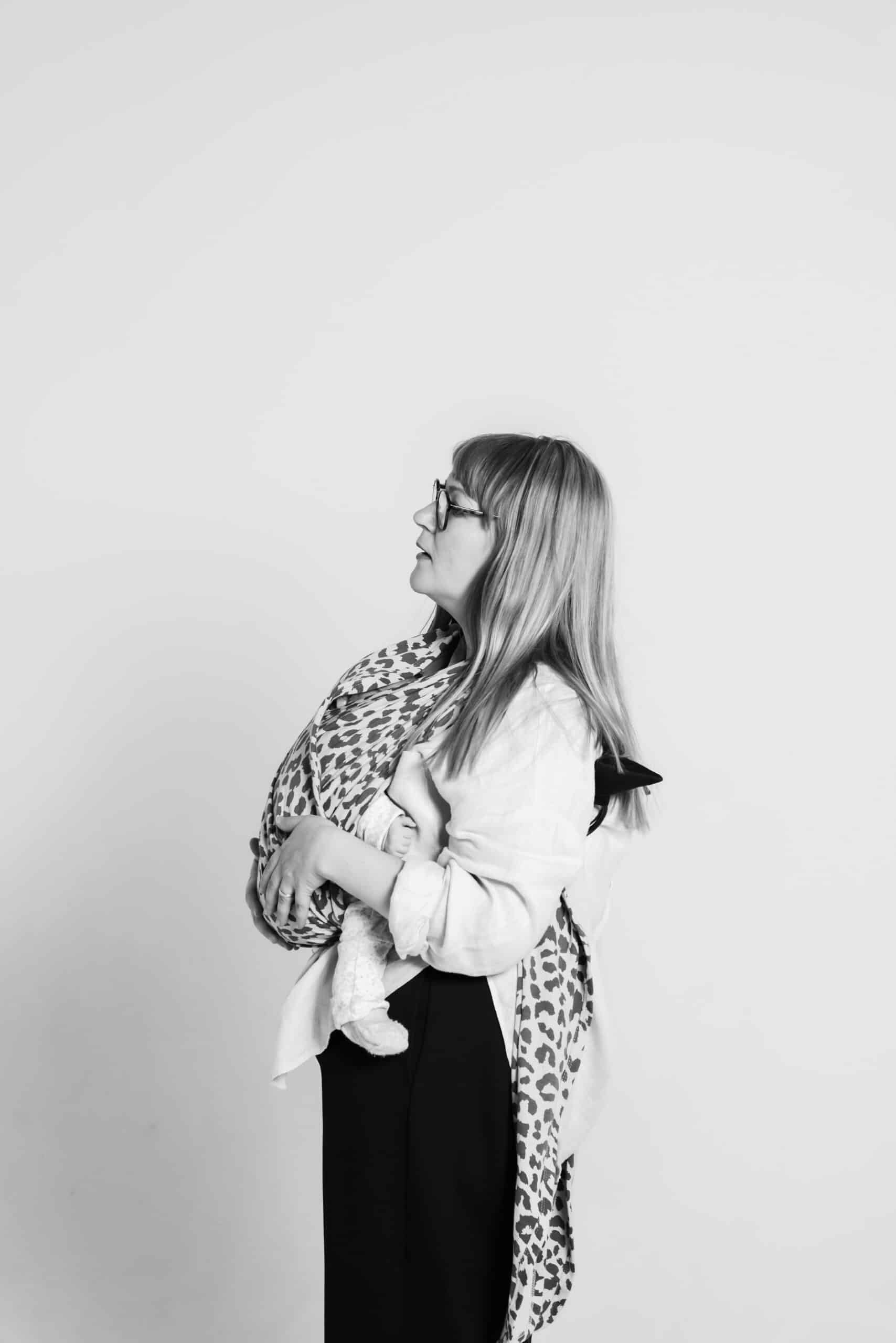
Sound Baths Up to the 36th Week of Pregnancy—Gong, Baby, and Trust in Your Body
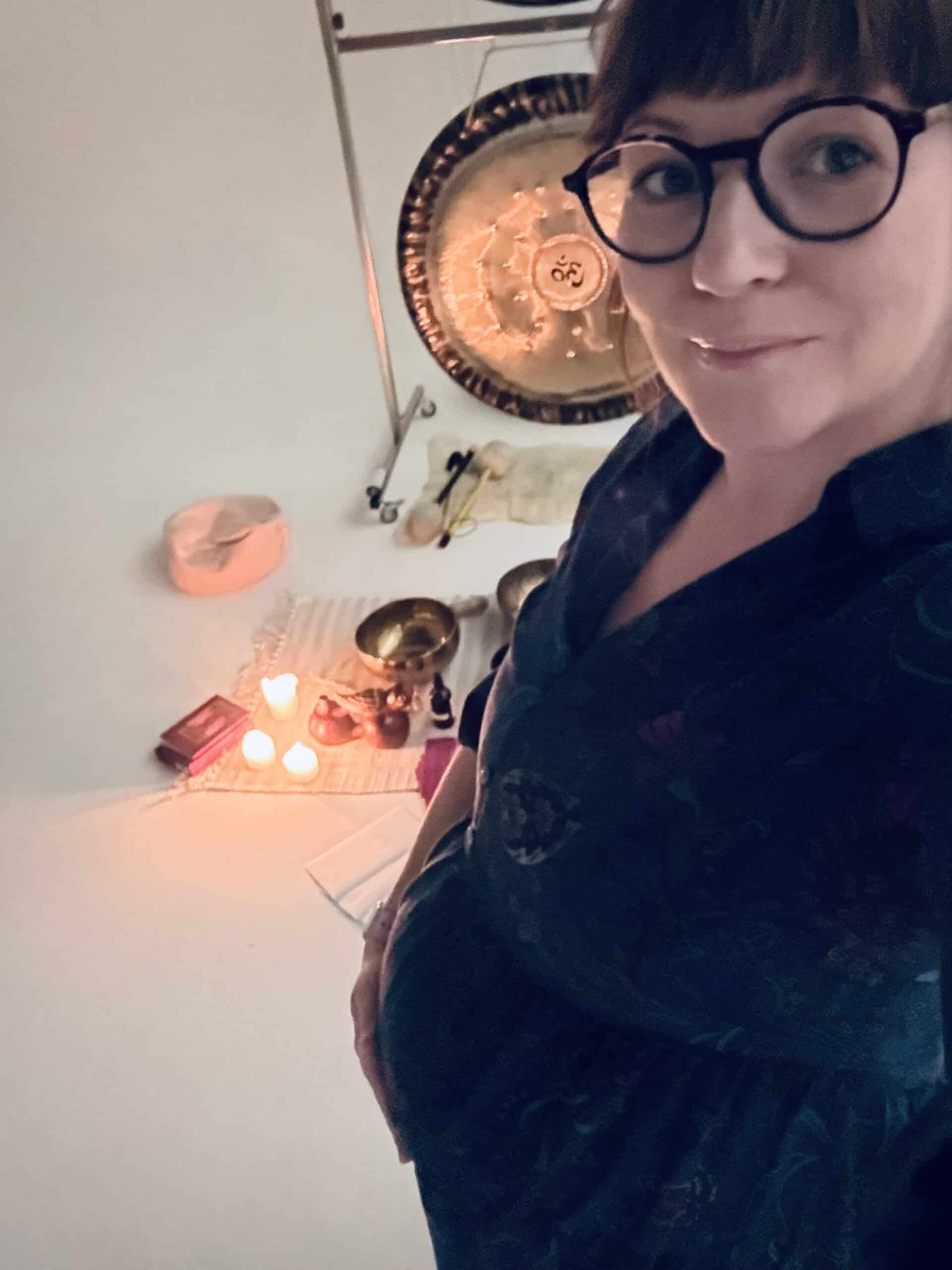
During my pregnancy, I continued to play the gong almost until the 36th week. Many people kept asking me the same question: “Isn’t that too loud for the baby?” or *“Could the vibrations harm the baby?”*
That’s a very understandable question. When we think of a gong, we often imagine powerful sounds and deep vibrations. What many people don’t realize, however, is that a baby in the womb already lives in a world full of sounds and vibrations. In the womb, the baby constantly hears the rhythm of the mother’s heartbeat, the flow of blood, her breathing, her digestion, and the resonance of her voice. These sounds travel through water and tissue, which naturally dampens and filters out external sounds. The amniotic fluid acts as a protective buffer that allows gentle vibrations to pass through while providing protection.
What does science say about sound, music, and gongs during pregnancy?
Scientific studies show that babies begin to respond to sounds around the 18th to 20th week of pregnancy. In the third trimester, they can recognize their mother’s voice and even remember melodies they have heard repeatedly while in the womb. Research in prenatal psychology and developmental neuroscience suggests that calm, repetitive sounds—such as music, singing, or rhythmic vibrations—can help the mother relax, which in turn benefits the baby.
This is so important because the mother’s emotional and physical state has a strong influence on the baby’s environment. When the mother relaxes, her body releases hormones such as oxytocin and endorphins, while stress hormones such as cortisol decrease. Studies show that sound baths and meditative music can reduce stress, slow breathing, and calm the nervous system.
The Sound Journey
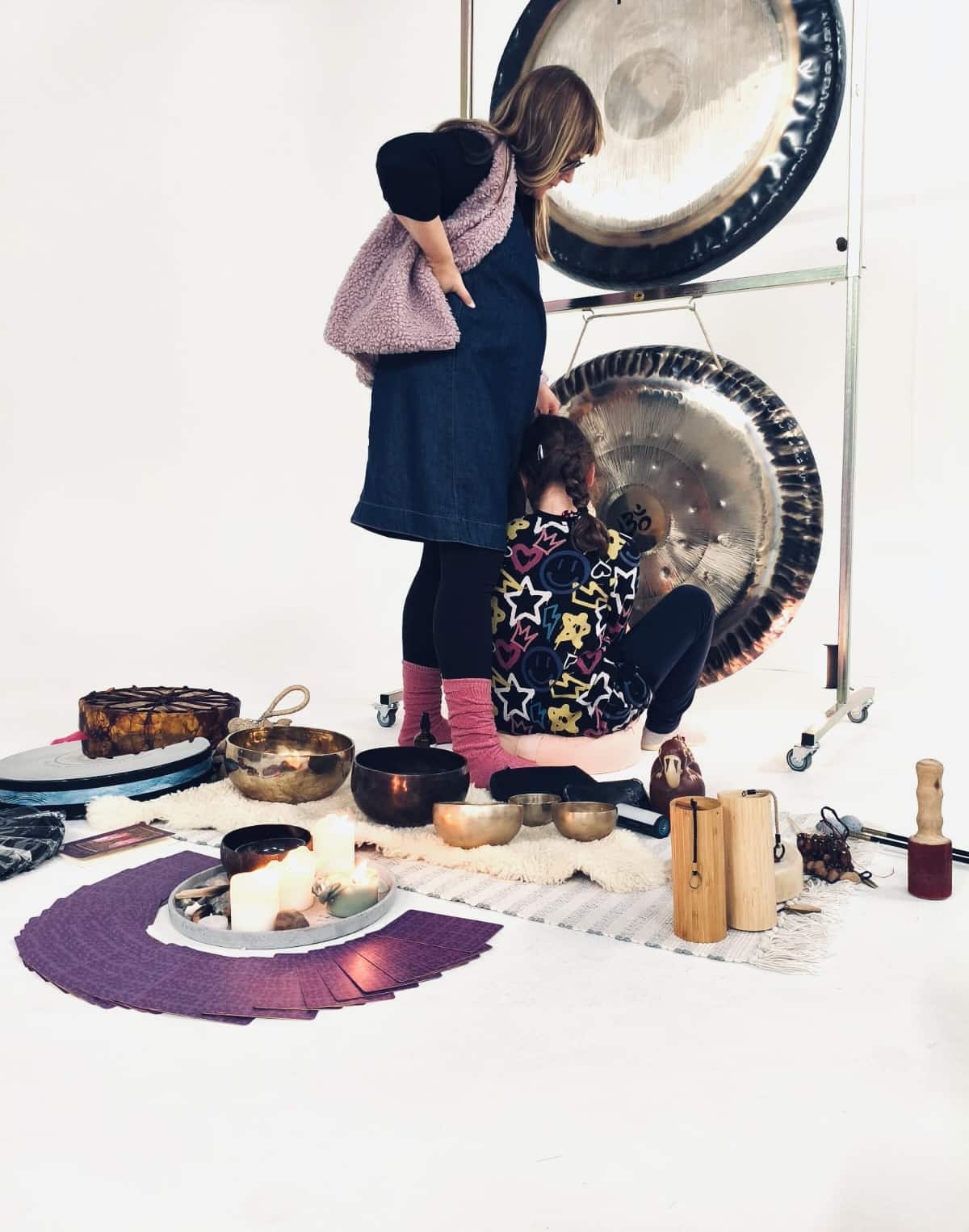
When I play the gong, I don’t play aggressively or extremely loudly. My intention is always meditation, grounding, and deep listening. The sound is expansive, rhythmic, and often very gentle. During my pregnancy, I consciously listened to my body and always adjusted the intensity and duration accordingly. For me, playing the gong became a form of communication—a shared vibration between me and my baby. It didn’t feel harmful; rather, it felt like creating a peaceful space of sound where we could both find calm. Many mothers sing, play instruments, or consciously listen to music during pregnancy: sound becomes a bridge between mother and child.
Of course, every pregnancy is unique, and it’s always important to listen to your own body and seek medical advice if you have any concerns. As a general rule, however, moderate exposure to music and sound is considered safe during pregnancy, and anything that helps the mother feel calm and centered can have a positive effect on the baby’s environment.
For me, continuing to play the gong wasn’t just safe—it was deeply nourishing. It reminded me that the body knows how to protect and sustain life, and that sound, when used mindfully, can be a wonderful companion during pregnancy.
And honestly … tell me: What baby doesn’t like music?
A Space Just for You – Safe & Secure
A gong bath is not a “performance” space. It is a safe place where everything you feel and experience is okay. Whether you’re deeply relaxed, whether you’re feeling emotions, or whether you’re simply enjoying the sound—it’s all okay.
After a gong bath, many people describe feeling:
- deep tranquility
- Lightness
- inner spaciousness
- Clarity
What You Should Bring
Not much. Just openness, and maybe:
- a mat (or two blankets)
- a blanket to cover yourself with
- a small pillow
- Water for afterward